
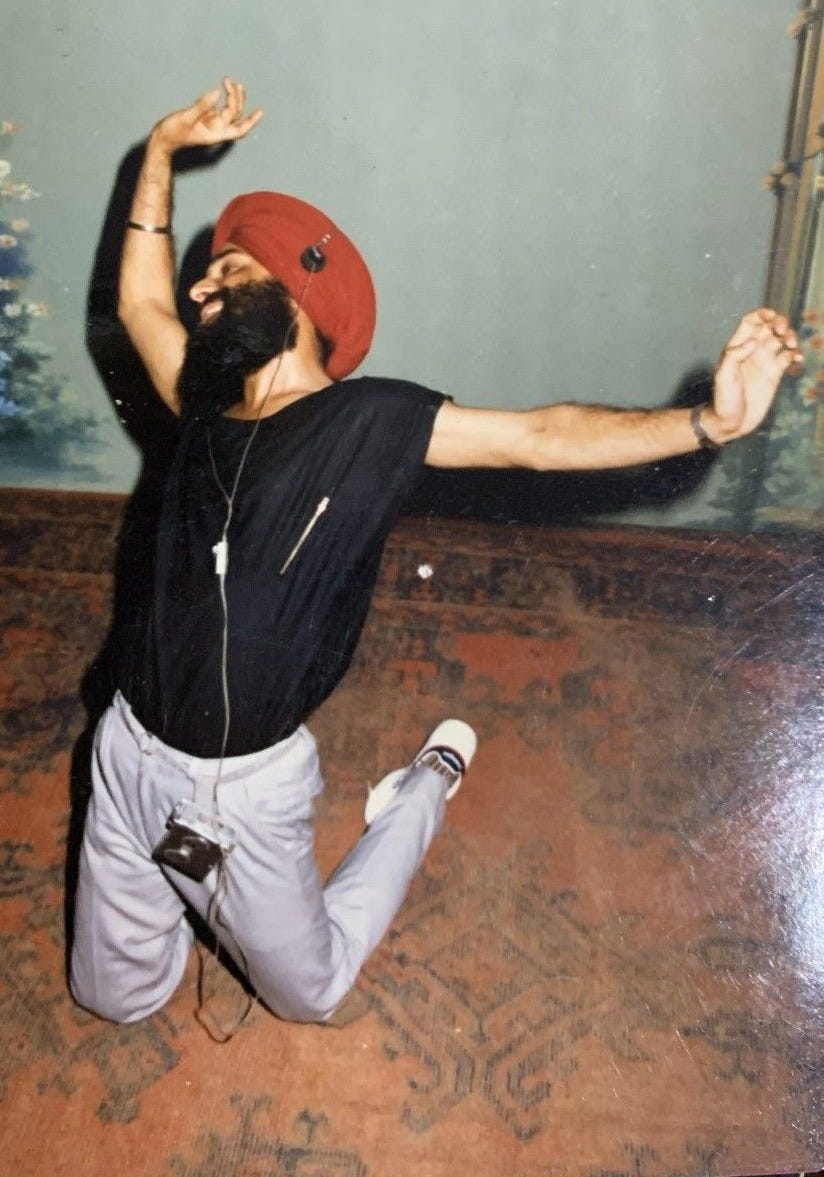
Imagine serving a god that hates long eyelashes and refuses to let you own a pair of slippers. Under these rules, which some men describe as quasi-religious in their specificity, a squeal of delight after licking an ice cream cone is a sin. Calling your mother on the phone, crossing your legs, even wearing a v-neck or turtleneck are grounds to disappoint Him. Your god loves solid clothes in black, blues, greens, browns, greys, and reds but hates pasteles, patterns, prints or checks. Dancing offends this god. Proving your loyalty to Him will require lots of alcohol, but not pink or fruity cocktails. Hobbies and areas of interest must be pre-approved: crocheting is out, football is in; economics is a good major, art history is terrible; joining a musical theater production is among the ultimate abominations, but knowing some basketball stats might be slightly redeeming.
How does one evangelize? “That’s fucking gay, man” “GAY LOL” “What are you, gay?” “That’s some fuckin’ pussy shit, bro.” F*ggot, gaylord, poof, pussy, fruity, and zesty are part of what I describe below as a gender enforcement lexicon, and before you dismiss these things as male paranoia of a bygone era, consider that research with over 30,000 British children finds that 78% of them report regularly hearing gay as an insult in 2024. For Gen Z and Gen Alpha boys and men, the “no homo” of the 2010’s has shifted to the word “pause:” an indication to your friends to stop and notice how gay they’re acting.
In my research with 100 British, Canadian, and American men for my forthcoming book Men Without Men, millennial, Gen X, and baby boomer men in my sample described something akin to growing up in a state of gender enforcement—a state of chronic insecurity driven by their peers’ surveillance—that was introduced to them as hilarious or innocuous. By calling each other gay for anything not seen as perfectly straight or masculine, men described learning the boundaries of what their gender can and can’t do. One man described avoiding being called gay as if he was a tip-toeing thief manoeuvring around infra-red laser beams in a high-security art museum after dark. You always seem to be setting off the alarm, he said, with a mistake meaning an instant queer or pussy laughed in his direction.
Even today, when some men are told that they don’t make enough money, or when they sing too high a note, or develop fat around the waist, these words stay embedded men’s consciousness even when the peer surveillance system of their adolescence and early manhood has largely receded or even disappeared. Men then enact this surveillance on themselves privately and often without conscious awareness. Gay, bisexual and straight men I spoke to lamented, often with a sense of humor and a nostalgic sadness, about how they still don’t do “that thing” they were called gay for to this day without really knowing why. One Australian man I spoke to still doesn’t drink earl grey tea after being called a poofter for requesting it; another American man still doesn’t wear shirts with patterns despite not having been called out for it in over a decade. The shirts still give him “a sad feeling.”
Being born into a religion of infinite laws is one framework men and boys have offered to help me understand what I have come to see as a type of sexuality surveillance state men live within to different degrees both within and outside conscious awareness. While men used the religious framework, psychologists tend to think of the commentary boys endure and later dole out themselves as gender socialization or gender enforcement manifested through what we once more ubiquitously called behaviorism: conditioning, like a form of programming, that nudges behavior in certain directions through repeated exposure to subtle and overt cues, rewards, and especially within in the world of boys, punishments.
Sociologists use different frameworks. Michel Foucault famously wrote about govermentality, the notion that our conduct is not necessarily handed down by an all-powerful authority but rather that conduct is most powerfully “governed” by processes happening all the time between real people in relationships. His panopticon theory of social behavior, a prison where inmates know they may be being watched at any time but don’t necessarily know when, give us a way to understand how men come to shape themselves in the image of an all-seeing eye just in case a peer or brother or father or a teammate or a judging stranger is looking.
In my research, a bizarre spectrum of behaviors were said to justify a gay or girly accusation. The most nonsensical things men had been called gay for men were typically instantly recalled because they were straight up dumb. Moments of judgement for bringing the wrong color calculator to class or for writing a poem to a school crush came exclusively from boys and men who acted as self-appointed gaydar experts who adjudicated what qualified as girly or gay. For a group that is apparently not gay, they seemed to know an incredible amount about gay people despite ostensibly not knowing or associating with anyone gay. No one was as much of a self-styled scholar on gayness as the straight boys and men who claim to have nothing to do with it.
The following is an incomplete list of 101 real things that have apparently justified the terms pathetic, gay, or pussy, from one man or boy to another, submitted to me via various sources of public crowdsourcing in English speaking Western nations.* If you’d like to skip to why pathetic, gay, and pussy are often used somewhat interchangaebly, and why these things aren’t actually about being gay even for the ones hurling the supposed insults, scroll to the end of this list.
Drinking out of a straw
Not making six figures
Owning a pair of slippers
Wearing a scarf
Taking a bath instead of a shower
Going out to brunch
Crossing legs while sitting
Dancing or taking a dance class
Taking the full extent of paternity leave or paid time off
Being scared while watching a horror movie
Liking pink alcoholic drinks
Having long eyelashes
Having curly hair
Having long hair
Having belly fat
Having chest fat
Wearing light blue, pink, polka dots, checks, or patterns
Patting another man on the back
Sending a thank-you note
Going to yoga
Going to Pilates
Embracing another man or boy for more than 1-2 seconds
Drinking earl grey tea
Standing the wrong way
Walking the wrong way
Refusing or vomiting from alcohol
Laughing in a high-pitched tone
Crying after breaking a femur
Joining a choir or musical theatre production
Not having enough muscle mass
Applying hand lotion or sunscreen
Knitting or crocheting
Cutting vegetables finely
Needing to go to the school nurse
Peeing sitting down
Dying one’s hair
Wrapping a gift, putting a bow on a gift
Saying “Good to see you!”
Having a Vespa scooter or riding on the back of one
Spending an afternoon at a museum
Watching or attending a women’s sporting event
Needing help putting air in a tire
Owning candles
Using emojis
Talking about children, nieces, or nephews
Talking about how much they love their wife
Holding a fork or a pencil in a strange way
Crying at the end of a movie
Enjoying children’s movies (Monsters Inc., Finding Nemo)
Taking anti-depressants
Enjoying petting various animals
Owning a cat or small dog
Having a skin-care routine
Keeping a journal
Meditating
Liking sea turtles
Canoeing
Wearing linen
Being a vegan or vegetarian
Enjoying or owning romantic comedies
Not wanting to own a gun
Not wanting to own a knife
Not having interest in hunting or fishing
Wearing a v-neck t-shirt
Grieving for too long
Pursuing pottery
Doodling in school
Catching and releasing, rather than killing, a spider
Going to a women’s rights protest
Eating a banana
Eating a clementine
Majoring in art or art history
Majoring in English literature
Majoring in interior design
Becoming a nurse
Having a babysitting job
Consoling a distraught friend
Allowing oneself to have a rectal exam
Covering one’s mouth while yawning
Screaming on a rollar-coaster
Calling your mother on the phone
Reading fiction
Finding the moon beautiful
Whispering or using a soft tone of voice
Carrying a tote bag
Using chapstick
Refusing to make sexually offensive comments about women friends
Being a fan of a women musicians or pop music generally
Wearing protective eyewear during a solar eclipse
Seeking out therapy
Having nice handwriting
Grooming one’s eyebrows
Using a fork and knife to eat pizza
Wearing strappy sandals
Keeping a childhood stuffed animal or memento
Being a vegan or vegetarian
Using hand sanitizer
Waving hello or goodbye
Arriving to work, school, or an event early
Making sure all of your houseguests are offered a glass of tea or water
Using a blanket on a cold evening
Rarely does someone really believe these behaviors are secret tells of being romantically and sexually attracted to other men. Anyone with their eyes open in the real world can see that many straight and gay men do these things and much more, and that someone who does none of these things would be insufferably inhuman. Arguing the truth or untruth of this list is insane. Like the men in my work told me, the surveillance is not about sexuality at all—notice that things like sexual touch with another man or having a boyfriend aren’t the focus of this list. Instead, they are quotidian ways of getting the boundaries of masculinity across. Pointing out when another guy does these things is supposed to be low stakes and funny: it’s not actually about not liking gay people, I was told several times in my research. That notion—that calling people gay has nothing to do with gay people—was famously parodied by the American animated sitcom South Park. Yet to many, in a privately held place, the cumulative effects of these tiny, bizarre digs were significant. Other researchers, not just me, have found that these quips have long lasting negative psychological impact. For some boys, the repeated pointing out of these moments was a way of showing affection for each other—the unseriousness of these insults were supposedly self-evident, a means to a laugh. That gay people and women were the butt of the joke either wasn’t clear or just didn’t matter: it was just what you did.
Many adult men will look at this list and laugh, believing this style of thinking to be historic. That’s part right, part wrong. In my forthcoming book, I spend a chapter detailing how homophobia became so tightly linked to masculinity—a process that began in English-speaking Western nations only as recently as the late 19th century and early 20th. Men’s near allergic avoidance of what we now widely regard as being gay and feminine wasn’t widespread until at least after the Second World War—but we need a lot more time to describe why that happened.
Teasing the reasons for this linking aside, many thought the 2010’s flavour of homophobia was a type of culminating (most American millennials remember Hilary Duff’s famous when you say gay do you realize what you say ad). Yet men and boys still experience regular forms of gender and sexuality policing, as reported by boys themselves as well as a cursory look into the online worlds in which they are increasingly exposed. One of the biggest street interview trends on TikTok asks boys to choose between two apparently catastrophic futures: what they would do if they had a gay son or a promiscuous daughter. A look at the humor style of mainstream male influencers who are not considered part of the manosphere, like Eric Ou, the resurgence of gay insults in schools according to parents and teachers, or research showing that 44% of American boys in midwestern schools were called “homo” or gay” in the last month, makes it clear that homophobic masculinities are either moving once again from fringe to main stream, or perhaps never left.
It is the nonsensical quality of this list that hints at a hidden core. Joking that a man is gay for ensuring his guests have water, calling his girlfriend to say goodnight, attending a women’s rights protest, or owning candles is less about being gay than it is about being like a woman. Being made fun of for screaming loudly on a rollercoaster really isn’t about the impression that one is attracted to men, rather it is about its perceived proximity to femininity, of which gay men are seen to be very close. At male homophobia’s center lies a disgust for women that parades as a disgust for gay men—a claim supported by bell hooks’ focus on black men in We Real Cool , CJ Pascoe’s ethnography of an American high school in Dude You’re a Fag, and Michael Kimmel in Masculinity as Homophobia. My list doesn’t include gay sex or romance and is sometimes literally about heterosexual behavior. The interchangeable use of pussy and gay, or “gay ass pussy shit,” isn’t put together by coincidence: male homophobia is rooted in a deep distaste for the feminine. In our current order of masculinity, gay men are rendered the biggest traitors and are thus the ones the system wants to most root out: men who do things that are culturally associated with the feminine or women. The men who are unfaithful to patriarchy, the ones who resist.
What does this all amount to? I wouldn’t be the first to suggest that men’s gender enforcement amounts to an identity built on a state of negation. Many others have written about masculinity not as its own discrete list of traits and behaviours, but a state of not being. Not being too girly, too gay, too silly, too poor, too weak, too emotional, too pathetic. These are easier things to claim as one’s own, as being “strong” or “protective” are traits that nearly everyone in society, especially mothers, can lay some kind of claim to because of their universalism. Yet in this framework of negation of core human capacities like care or expressing tender emotions—which are also universals—one becomes more masculine by widening the distance between all those who are second class: women, gay people, and children (note the items that encourage men to distance themselves from childish things, like kids’ movies or keeping childhood mementos). A question arises from this identity formed on absence and all the effort put into maintaining it: when men cannot build their identities on not being like women or gays, who will they choose to be? I mean this with hopefulness. What might it look like when the women and gay people’s behaviors are held up as models, rather than the butt of a joke? I for one would like to live in a world where everyone can eat bananas, enjoy sea turtles and ask if their guests need a glass of water.
What we can take solace in: despite being raised in a state of masculine surveillance, most men don’t really believe that there’s anything amiss about most of the things on this list. We have a word for this in psychology. Pluralistic ignorance is the tendency for people to overestimate other people’s belief in an idea. Some people call this the perception gap: we go along with the group because we perceive others to be more bought in than they really are. You can read some research on this idea as it pertains to men trying to estimate other men’s beliefs in masculine norms here, here, and here. No matter what you call it, more men than meets the eye are ready for something new.
Raised devoutly Catholic, I still feel the urge deep within to say a Hail Mary prayer each time I hear the sound of an ambulance. I took this habit from my mother. I still do it sometimes despite having a conflicted, often antagonistic relationship with the ideologies of the Roman Catholic Church and the figure of the Blessed Virgin. Its from this automatic impulse of ingrained devotion that I relate to the men in my research the most. They often can’t quite explain why they feel the urge to be loyal to a kind of punishing masculine god. Yet it is other men, not God, who have set the terms, and men collectively who have the power to change them.
__________
*This list was compiled from two sources: men who participated in my research on men’s friendships conducted during my time at Stanford University, which is described extensively in my forthcoming book, and a public poll conducted on my social media. You can see my posting of those social media submissions here. It is not intended to replace a peer-reviewed empirical investigation, nor does it express a census representative sample in any of the contexts it represents: racially and class diverse American, Canadian, Australian, and British men. It skews towards the experiences of men living in rich Western English-speaking nations as well as the construction of homophobic masculinities in those contexts.
If you have doubts about whether the items on my list could possibly be real, I suggest looking at Scottish artist Trackie McLeod‘s 2026 "List of Things That Were 'Gay' in School.” I found out about this art installation after compiling my own list. A few of the items we’ve collected are similar, if not the same (being early to school).
23 Drinking Earl Grey tea. This is how I find out Captain Jean Luc Picard was gay? 😳🤣